Miss My Mom, My Angel in Heaven Poem
A Designer’s First Look: Soft, Sincere, and Built for Meaning
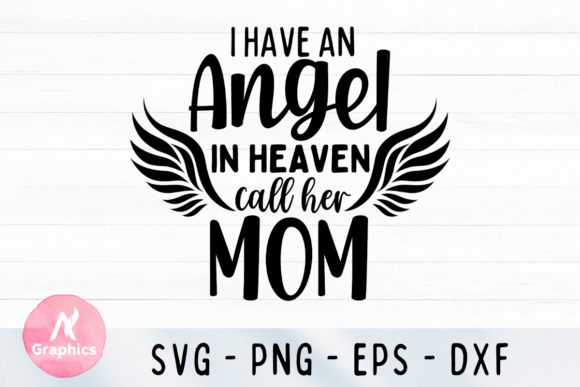
When I opened Miss My Mom, My Angel in Heaven Poem, my first thought wasn’t about stitch count or file format—it was about resonance. This isn’t a flashy, trend-chasing graphic. It’s quiet. Thoughtful. The kind of design that lands softly but stays with someone long after they’ve seen it. As an embroidery designer who’s stitched hundreds of sentimental pieces—from baby onesies to hospice care blankets—I immediately pictured this on a lightweight cotton tote bag, hand-stitched by a daughter for her sister’s birthday. That’s where Miss My Mom, My Angel in Heaven Poem lives best: in handmade products where emotion is the main material.
What It Actually Embroiders Like—Not Just What It Looks Like on Screen
I tested Miss My Mom, My Angel in Heaven Poem on three real-world substrates: a midweight unbrushed cotton sweatshirt, a linen-cotton tea towel, and a 60% cotton/40% polyester baby bodysuit. On the sweatshirt, the script flowed cleanly—no thread breaks, no puckering—when paired with medium-weight cutaway stabilizer and 40-weight rayon thread. The poem’s gentle curves held shape beautifully under satin stitch lettering, and the subtle vintage-inspired flourishes (think soft swirls beneath “Angel” and delicate dot accents) read clearly without overwhelming the fabric.
On the tea towel? Slightly trickier—but not problematic. The open weave demanded a lighter touch: reduced stitch density, slightly larger letter spacing, and a tear-away + light iron-on combo stabilizer. Even then, the design retained its warmth and legibility. On the baby bodysuit, I scaled it down to 3.2 inches wide and used a soft water-soluble topper—critical for avoiding scratchiness. It worked, but only because the original layout avoids tight clusters or ultra-thin lines. That’s a win: Miss My Mom, My Angel in Heaven Poem is forgiving, not fussy.
Where It Shines—and Where You’ll Want to Pause
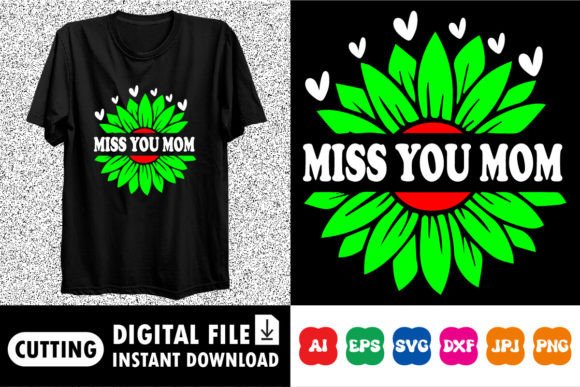
This design thrives on products where sentiment carries the sale: embroidered pillow covers for bereavement support groups, custom aprons for moms’ coffee mornings, small hoop-embroidered patches sewn onto memory quilts, or minimalist sweatshirts sold at local hospice fundraisers. Its groovy, retro-leaning typography reads as sincere—not kitschy—which builds trust with buyers seeking authenticity over cliché.
That said, avoid using Miss My Mom, My Angel in Heaven Poem on curved surfaces like structured caps unless you’re experienced with distortion compensation. The lowercase flow and connected letters don’t adapt well to severe curvature without manual adjustment. Also skip it on highly textured fabrics (like bouclé or heavy terry cloth) unless you’re willing to add extra underlay and test extensively. And while it’s labeled a T-Shirt Design, don’t assume it’s optimized for direct-to-garment or sublimation—this is first and foremost a machine embroidery design, not a print-ready graphic. Use it as intended: stitched, tactile, human-made.
Design Integrity Meets Commercial Reality
As an Etsy seller and small shop product developer, I pay close attention to how a design affects perceived value. Miss My Mom, My Angel in Heaven Poem elevates a simple cotton tote from “nice gift” to “meaningful keepsake.” Customers notice the spacing, the rhythm of the line breaks, the absence of clipart-style embellishment. That translates directly to willingness to pay more—and to leave five-star reviews citing “so much more elegant than other options.”
It also supports brand consistency. If your craft business centers on gentle, mindful, family-centered messaging, this design reinforces that voice without needing rewrites or redesigns. No forced cutesiness. No mismatched fonts. Just one cohesive, emotionally intelligent embroidery file that works across multiple product types—tote bag design, sweatshirt embroidery, baby embroidery, holiday embroidery—all while feeling intentional.
Practical Notes Every Embroiderer Should Run Through
- Always test on scrap fabric first—especially if stitching on dark or stretchy material. The poem’s light script benefits from high-contrast thread (e.g., ecru on navy, charcoal on cream).
- Check stitch density before hooping. Overly dense fills will stiffen delicate items like baby clothes; too-light density loses definition on textured towels.
- Confirm hoop size compatibility. While scalable, the full layout likely fits best in a 5x7 hoop. Smaller hoops may require thoughtful cropping—don’t sacrifice legibility for fit.
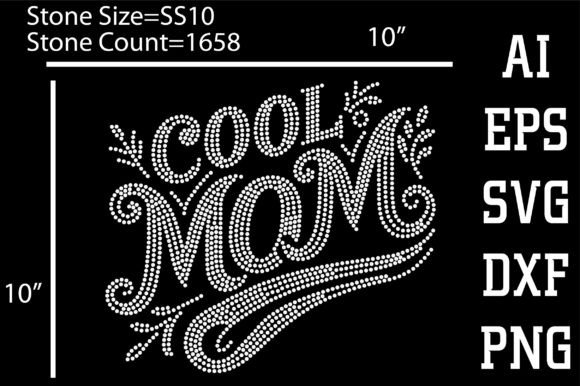
- Inspect small details: those tiny dots and hairline connectors can vanish on low-res machines or with poor tension. A quick black-and-white mockup helps spot them early.
- Use proper stabilizer—cutaway for knits, tear-away for stable wovens, water-soluble for napped or delicate surfaces.
- Verify licensing before selling finished products or bundling the file into digital embroidery bundles. Since the listing mentions commercial use for mugs, shirts, and sublimation, confirm whether that includes resale of stitched items or just digital distribution.
Final Thought: Not Just Another Poem Graphic
Miss My Mom, My Angel in Heaven Poem stands out because it treats grief with grace—not grandeur. It doesn’t shout. It breathes. That makes it unusually versatile: equally at home on a quiet kitchen towel gifted to a new widow, a personalized gift stitched onto a child’s backpack, or a boutique’s limited-run collection of memorial apparel. For embroidery designers, craft business owners, and Etsy sellers who value emotional intelligence as much as technical execution, this isn’t just another Graphics download. It’s a quietly powerful tool—one that reminds us why we stitch in the first place: to hold meaning in our hands, and pass it on.