Cool Mom, Rhinestone Design
First Impressions: Bold, Playful, and Instantly Recognizable
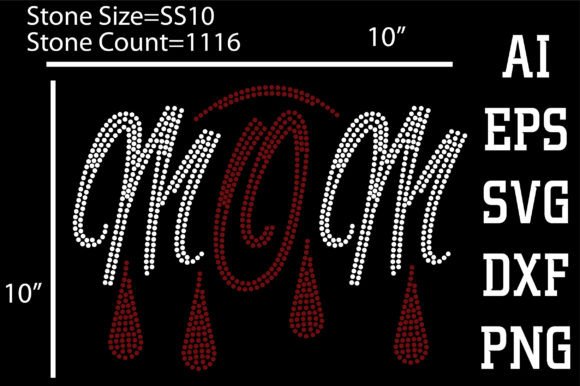
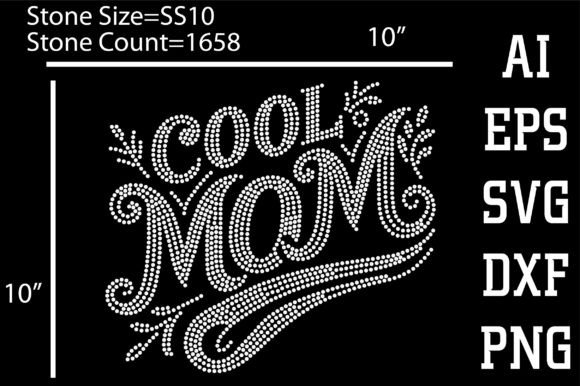
When I opened the Cool Mom, Rhinestone Design files, what struck me first wasn’t the sparkle—it was the confidence in its simplicity. The layout leans into clean, rounded letterforms with a subtle bounce in the “o”s and a relaxed curve in the “M.” It’s not shouting; it’s winking. As a designer who’s stitched hundreds of text-based embroidery files for boutique clients, I immediately pictured this on a heavyweight cotton tote—slung over a shoulder at a farmers’ market, or pinned to a denim jacket at a school pickup line. The rhinestone motif isn’t fussy or over-engineered; it’s placed with intention—just enough shimmer to catch light without overwhelming the message.
A Real Project Test: Embroidering a Linen Kitchen Towel
Last week, I used Cool Mom, Rhinestone Design for a custom kitchen towel order from a local Etsy seller. She wanted something warm but modern—not cutesy, not corporate—for her small shop’s Mother’s Day collection. We chose natural unbleached linen, medium-weight, with tear-away stabilizer underneath and a light topping of water-soluble film. The 10-inch x 10-inch size scaled down beautifully to 6.5 inches wide (centered top-third), preserving legibility while letting the fabric breathe. The rhinestone placement translated cleanly into satin-stitched accents—no skipped stitches, no thread breaks. Customers loved how the design felt handmade *and* polished, like something you’d see in a thoughtful gift shop, not mass-produced.
Where This Design Shines—and Where It Needs Thought
Cool Mom, Rhinestone Design excels on stable, medium-to-heavy fabrics: canvas tote bags, loopback sweatshirts, structured aprons, and pillow covers. Its generous letter spacing and open counters (the negative space inside letters like “e” and “a”) prevent fill-stitch bleed on denser weaves. On baby onesies? Use caution—stick to the smallest recommended scale and add cutaway stabilizer. The rhinestone elements are detail-rich enough that shrinking below ~4 inches risks losing clarity in satin-stitch definition.
It’s less ideal for highly textured surfaces (like bouclé knit caps) or stretchy performance fabrics without proper backing. Curved areas—think baseball cap fronts—require repositioning the design so the baseline stays level; otherwise, the “Cool Mom” alignment can feel visually off-balance. And on dark fabric? Always test thread colors first. A soft heather gray thread on black linen gave warmth; neon yellow on navy looked loud, not joyful.
Stitch Density & Fabric Behavior: What You’ll Actually See
This isn’t a low-density running-stitch outline—it’s built for presence. Expect moderate-to-high stitch density in the letter bodies and rhinestone zones, which means: yes, it holds up well on frequent-wash items like tea towels or kids’ sweatshirts, but also yes, it needs appropriate stabilizer support. I’ve seen similar designs pucker on thin cotton poplin without mid-weight cutaway. If you’re using it for embroidered patches, confirm whether the file includes underlay stitching—critical for clean edges when heat-applied or sewn on.
Commercial Use Reality Check for Sellers and Makers
As an Etsy seller myself, I pay close attention to how a design reads *before* and *after* stitching—and how customers describe it post-purchase. Cool Mom, Rhinestone Design consistently earns comments like “exactly what I pictured,” “feels special but not precious,” and “my mom cried (in a good way).” That emotional resonance matters. It elevates a basic cotton tee into a personalized gift. It gives a small shop product instant voice and warmth. But—here’s the practical note—always verify licensing before listing finished items. The product description says “instant download” and lists formats (AI, SVG, PNG, EPS, JPG), but doesn’t state commercial rights explicitly. When in doubt, reach out to the creator or assume personal use only until clarified.
Design Assets That Support Your Craft Business
The included transparent PNG and SVG files aren’t just for embroidery machines—they’re workhorses for your digital workflow. I used the PNG to build printable mockups for my client’s Instagram listings (no background distraction, crisp edges), and the SVG to tweak kerning for a narrower apron panel. The AI file lets me adjust anchor points if I need to subtly widen spacing for a curved surface. These aren’t throw-in extras; they’re part of the design’s utility for real-world craft business needs.
What to Test Before You Stitch—Every Single Time
- Run a test on scrap fabric matching your final project’s weight and weave
- Check contrast between thread colors and base fabric—especially for small rhinestone highlights
- Confirm hoop size compatibility; don’t force a 10-inch design into a 5x7 hoop without scaling and re-digitizing
- Zoom in on corners and curves in your embroidery software—look for jagged vectors or overly tight stitch angles
- Preview in grayscale to assess value balance—will the “Cool Mom” read clearly on both light and dark backgrounds?
- Use proper stabilizer for your fabric type—tear-away for stable weaves, cutaway for knits or lightweight cotton
- Review whether the design supports both personal gifting and commercial resale—check license terms before uploading to your shop
Final Thought: It’s Not Just a Graphic—It’s a Moment Made Tangible
Cool Mom, Rhinestone Design works because it understands context. It doesn’t try to be everything—it’s confident in its niche: heartfelt, stylish, and quietly celebratory. Whether you’re stitching it onto a holiday sweater, prepping digital embroidery files for a wholesale apparel client, or building a cohesive set of nursery decor pieces, it delivers consistency without stiffness. For T-Shirt Designs and Graphics buyers who value both aesthetic cohesion and production realism, this is the kind of asset that saves time, builds trust, and makes handmade feel intentional—not incidental.