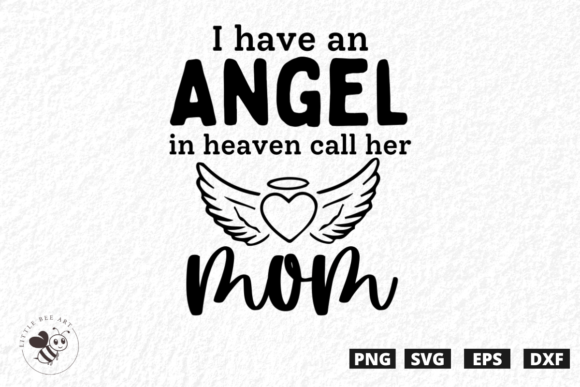
I Have an Angel in Heaven Call Her Mom
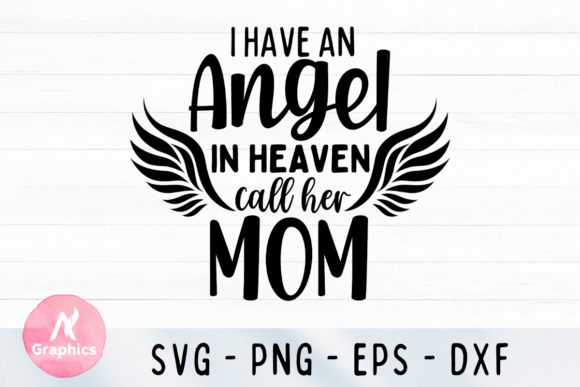
As a designer who’s stitched over 200 memorial pieces—from baby onesies to boutique aprons—I opened I Have an Angel in Heaven Call Her Mom expecting sentiment, but what stood out first was its quiet intentionality. It’s not ornate or overly scripted; it’s soft-edged, gently curved, and built for breath—not bling. That matters. Because when you’re embroidering something meant to comfort, the design must hold space—not dominate it.
A Tote Bag That Feels Like a Hug
Last week, I prepped this design for a custom embroidered tote bag—linen-cotton blend, medium weight, intended as a sympathy gift for a friend who’d lost her mother just before Mother’s Day. I didn’t choose it for flash. I chose it because the phrase flows like spoken memory: gentle cadence, no harsh angles, no decorative swirls that distract from the words themselves. The layout is horizontal, modest in width, and sits comfortably within a 4” x 6” hoop—a sweet spot for totes, tea towels, and pillow covers without crowding seams or handles.
On fabric, the letterforms read clearly at 3.5” wide. No tiny serifs. No overlapping letters. That’s critical for embroidery: every curve needs room to breathe under stitch. I ran a quick test on scrap linen with 40-weight rayon thread and medium tear-away stabilizer—no puckering, no skipped stitches. The line weight holds up across satin and fill stitch zones, and the spacing between “Angel” and “in Heaven” gives the eye a natural pause—like a soft exhale.
Where This Design Earns Its Keep
I Have an Angel in Heaven Call Her Mom shines brightest where emotional resonance meets practical execution:
- Custom apparel: Works cleanly on sweatshirts (front chest or upper back), crewnecks, and lightweight hoodies—especially when paired with subtle tonal thread (heather gray on charcoal, ivory on oatmeal).
- Baby embroidery: Ideal for onesies, burp cloths, or nursery pillows—but only if sized down thoughtfully. At 2.75”, the text remains legible without thinning out stitch density.
- Embroidered patch: Clean outlines and open letter spacing translate well to heat-applied or sew-on patches—no risk of inner corners collapsing during cutting.
- Holiday embroidery: Fits quietly into Christmas ornaments, keepsake stockings, or Easter handkerchiefs—never competing with seasonal motifs, always grounding them.
- Etsy seller & small shop product: It’s versatile enough for digital embroidery file listings, printable mockups, and ready-to-ship handmade products—all while maintaining dignity and warmth.
Where to Pause—and Test First
This isn’t a one-size-fits-all embroidery file. Its strength is also its limit: simplicity demands precision. Here’s where attention pays off:
- Small hoop sizes: Below 3”, letter height shrinks fast. Avoid sub-2.5” unless you’ve verified stitch clarity on your machine and fabric combo.
- Textured fabrics: Bumpy weaves (like bouclé or heavy terry) can blur fine edges. Add cutaway stabilizer underneath—and consider slightly heavier thread (30-weight) for definition.
- Stretchy fabric: Knits need firm stabilization. Don’t rely on tear-away alone—layer with light cutaway or use adhesive-backed stabilizer to lock the design in place.
- Dark fabric: The PNG preview shows transparency, but thread contrast matters more than screen brightness. Test ivory, ecru, or pale gold thread—not just white—on black or navy.
- Curved surfaces: Caps and beanies compress letter spacing. Resize horizontally by 5–8% to compensate—or skip caps entirely unless you’re using a cap frame and dense underlay.
What It Adds to Your Finished Product
When stitched well, I Have an Angel in Heaven Call Her Mom elevates perceived value—not through complexity, but through care. Customers notice when lettering doesn’t bleed, when curves don’t flatten, when the rhythm of the phrase feels intentional. That builds trust. It tells buyers your handmade product isn’t rushed. It signals professionalism—even on a $25 tote bag.
For Etsy sellers, it supports brand consistency: pair it with soft neutral palettes, minimalist packaging, and handwritten notes. For craft fairs, it’s a quiet anchor piece—often the first thing grieving customers gravitate toward, not because it shouts, but because it listens.
Designer Notes You’ll Actually Use
Before stitching your first client piece—or listing this as part of your T-Shirt Designs collection—do these five things:
- Test the design on scrap fabric *exactly* like your final project—same weave, same stretch, same color.
- Check thread color contrast in natural light *and* under warm bulb light—some ivories vanish on cream fabric in certain lighting.
- Review stitch density in the “Heaven” curve and “Mom” terminal—these areas often tighten up and may need slight manual adjustment in your embroidery software.
- Confirm hoop size compatibility with your machine—especially if you’re using multi-position hoops or rotating frames for larger runs.
- Verify licensing terms before selling finished items or bundling this as part of a commercial embroidery kit—this is a digital embroidery file, not a royalty-free asset by default.
And one last note: this design doesn’t ask to be seen first. It asks to be felt first. That’s rare. And valuable. Whether you’re stitching a single pillow cover for a friend or scaling production for your craft business, I Have an Angel in Heaven Call Her Mom earns its place—not as decoration, but as quiet presence.