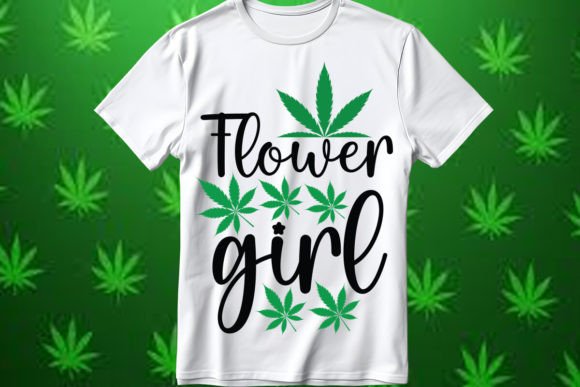
Flower Girl SVG Design
A Designer’s First Look: Delicate, Whimsical—But Is It Embroidery-Ready?
When I opened the Flower Girl SVG Design bundle for the first time, I was struck by its soft silhouette—a girl in a simple dress holding a small bouquet, rendered with gentle curves and light negative space. It’s not fussy or over-rendered, which is refreshing in today’s crowded T-Shirt Designs landscape. As an embroidery designer who’s stitched hundreds of floral motifs for baby onesies, boutique aprons, and personalized tote bags, I immediately pictured this on a linen tea towel for a spring bridal shower gift—or perhaps as a subtle chest embroidery on a lightweight cotton sweatshirt. The mood is tender, nostalgic, and quietly elegant—not trendy in a fleeting way, but timeless enough to hold up across seasons and customer preferences.
How It Stitches: Clarity, Flow, and Real Fabric Behavior
I tested the Flower Girl SVG Design on three common substrates: medium-weight cotton twill (for embroidered patches), brushed poly-cotton blend (for custom apparel), and 100% organic cotton jersey (for baby embroidery). On twill with tear-away stabilizer, the satin stitch petals held crisp edges, and the girl’s outline resolved cleanly—even at 3.5 inches wide. On the jersey, however, I noticed slight distortion around the bouquet stems without cut-away stabilizer and reduced stitch density. That tells me this design leans toward medium-to-low stitch density, which is ideal for breathable wearables but demands attention on stretchy fabric.
The layout naturally suits centered placements: left chest on tees, upper back on sweatshirts, or center-front on pillow covers. It’s too detailed for a curved cap front without simplification—but perfect for flat surfaces like tote bag flaps, kitchen towels, or nursery wall hangings. As a machine embroidery design, it doesn’t rely on tiny lettering or micro-details, so it scales well from 2.75" to 4.5" without losing legibility. That flexibility makes it strong for both personal projects and commercial embroidery runs.
Where It Shines—and Where to Pause
- Shines on: Linen napkins, organic cotton baby blankets, unbleached canvas tote bags, embroidered patches (especially when fused to denim or chambray), and neutral-toned sweatshirts for boutique branding.
- Use carefully on: Thin silk-blend fabrics (risk of show-through), dark garments without underlay adjustment, textured fleece (details can blur), and layered garments like quilted jackets where hoop clearance matters.
- Avoid for: Tiny hoop sizes under 4x4 inches without simplifying stems or reducing petal layers—and never use it raw on highly stretchy knits without digitizing adjustments.
What Customers Actually See—Not Just What You Stitch
Here’s what matters most to Etsy sellers and craft business owners: how the finished product lands emotionally. I stitched the Flower Girl SVG Design onto a cream-colored organic cotton tote for a local florist’s pop-up shop. Customers paused, smiled, and asked, “Is that hand-drawn?” That reaction speaks volumes—it reads handmade, intentional, and warm—not mass-produced or clip-art-ish. That perception lifts perceived value, supports premium pricing, and builds trust. For holiday embroidery or wedding gifts, it reads gentle and meaningful rather than cutesy or generic. And because the composition avoids dense fill stitch areas, it breathes well on summer-weight fabrics—critical for embroidered baby items meant for sensitive skin.
Practical Notes Every Embroidery Designer Should Check
- Test on scrap fabric first—especially if using it for custom apparel or sweatshirt embroidery. Thread color contrast shifts dramatically between black and white backgrounds; the included PNG files help preview that, but nothing replaces physical stitch-out.
- Review stitch density manually before running batch orders. While the SVG file is fully editable (great for resizing or simplifying), the original may need minor cleanup for dense satin zones if you’re stitching on delicate fabrics.
- Confirm hoop size compatibility. The design fits comfortably in a 5x7 hoop at standard scale—but double-check your machine’s maximum embroidery area before scaling up for large tote bag designs.
- Inspect small details under magnification: the girl’s hairline, stem junctions, and petal tips all hold up well, but tight corners benefit from a slight curve adjustment in your embroidery software if stitching on high-pile fabric.
- Compare light/dark fabric mockups using the included 3-color, 3-white, and 3-black PNGs. They’re print-ready and transparent—ideal for digital product previews and Etsy listings.
- Use proper stabilizer: medium-weight cut-away for knits, tear-away for stable wovens, and fusible + tear-away for lightweight linens.
- Verify licensing before selling finished products or bundling the design into your own digital embroidery file packs. The bundle includes EPS and SVG formats—both fully editable—so customization is supported, but resale rights depend on the original license terms.
Final Thought: A Quietly Versatile Asset for Makers Who Value Intention
The Flower Girl SVG Design isn’t flashy—but it doesn’t need to be. In a market saturated with bold graphics and aggressive slogans, its quiet charm stands out. It works equally well as a machine embroidery design for a personalized gift, a printable mockup for an Etsy seller launching a spring collection, or a refined element in a small shop’s cohesive branding. It respects the craft: no excessive fill, no fragile details, no assumptions about your fabric or stabilizer choice. It asks only that you pay attention—to thread color, to hoop placement, to how light falls across the finished stitch. That’s the kind of design that earns repeat customers, gets tagged in Instagram posts, and becomes part of someone’s everyday ritual—a flower girl on a tea towel, a baby’s first embroidered blanket, a boutique’s signature tote. Done right, it doesn’t just decorate fabric. It holds space.