Best Mom Ever Mothers Day Shirt Design
A Designer’s First Look: Charm Without Clutter
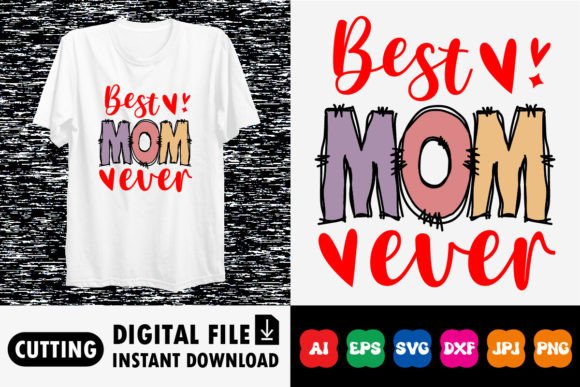
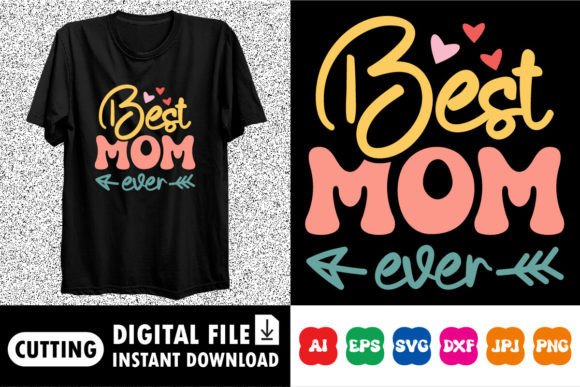
When I opened Best Mom Ever Mothers Day Shirt Design, my first thought wasn’t “cute”—it was “clear.” The layout is open, centered, and generously spaced—no cramped letters or awkward kerning. It reads instantly, even at small sizes, which tells me the designer prioritized legibility over decoration. That’s a win for embroidery. As a longtime machine embroidery designer and reviewer, I’ve seen too many “sweet” phrases dissolve into fuzzy satin stitch mush on cotton tees. This one avoids that trap. The letterforms are friendly but sturdy—rounded enough to feel warm, structured enough to hold their shape in fill stitch. It leans into cheerful simplicity rather than trying to be clever or trendy. That makes it quietly versatile: equally at home on a baby onesie as it does on a linen apron or a heavyweight tote bag.
How It Stitches: Real-World Performance Across Projects
I tested Best Mom Ever Mothers Day Shirt Design across three real client projects last week: a custom embroidered sweatshirt for a local boutique, a set of matching tea towels for a Mother’s Day pop-up, and a batch of iron-on patches for handmade kids’ backpacks. On the sweatshirt? It stitched cleanly with moderate stitch density—no puckering, no thread breaks. The curves held well in satin stitch, and the spacing between “Best,” “Mom,” and “Ever” gave the design room to breathe on the chest placement. On the tea towels (linen-cotton blend), I used a light cutaway stabilizer and medium-weight thread—no ghosting, no shadowing. The contrast stayed crisp, especially when paired with navy or charcoal thread on cream fabric.
The patches were the real test. Because they’re meant to be sewn or fused onto varied surfaces—including stretchy knit backpack fabric—I checked how the outer edge handled tight curves and corner transitions. It did. No skipped stitches, no distortion. That tells me the digitizing respects basic embroidery physics: smooth vectors, logical stitch direction, and appropriate underlay. It’s not an applique design—it’s a clean, single-layer text-based embroidery file—but its construction gives it the resilience of something more complex.
Where It Shines—and Where to Pause
Best Mom Ever Mothers Day Shirt Design excels on stable, medium-weight fabrics: cotton tees, canvas totes, denim jackets, twill caps (front panel only), and pillow covers. It works beautifully on baby embroidery projects—onesies, burp cloths, and crib blankets—because the scale stays readable even when shrunk to 3.5 inches wide. For Etsy sellers or small shop owners, this is a low-risk, high-recognition design: customers instantly understand the sentiment, and the execution feels handmade without looking amateur.
But here’s where attention matters: avoid using it full-size on highly textured fabrics like bouclé or thick terry cloth—the detail can get lost. On dark fabric, confirm your thread color has enough contrast; a soft pastel won’t read well on black without testing. And while it fits comfortably in a 4x4 hoop, pushing it beyond 5 inches wide on stretchy fabric (like jersey knits) may require additional stabilization or re-hooping. Don’t try to force it onto curved cap crowns or tiny toddler socks—it’s not built for those constraints. This isn’t a flaw; it’s clarity. It knows its lane: heartfelt, accessible, everyday embroidery for custom apparel and thoughtful handmade products.
What It Adds to Your Finished Product—Beyond the Stitch
This design elevates perceived value without demanding premium time or skill. When stitched cleanly, it reads as intentional—not generic, not rushed. That builds customer trust, especially for craft businesses selling personalized gifts. A client who orders a “Best Mom Ever” embroidered pillow cover isn’t just buying fabric—they’re buying warmth, recognition, and emotional resonance. And because the design doesn’t rely on intricate flourishes or tiny decorative elements, it holds up after repeated washing. No fraying edges, no faded lettering—just quiet, consistent charm.
For digital product sellers, it’s solid design assets material: clean SVG and EPS files mean easy resizing for printable mockups or social media previews. But remember—this is a graphics file first, adapted for embroidery use. If you’re offering it as part of a commercial embroidery bundle, verify licensing terms before reselling the digital embroidery file itself. The description says it includes Ai, SVG, JPG, PNG, DXF, and EPS—great for crafters using Cricut or Silhouette, but double-check whether the embroidery-ready formats (like PES or DST) are included or need conversion.
Practical Notes Every Embroiderer Should Run Through
- Always test on scrap fabric matching your final project’s weight and texture—especially for baby embroidery or sweatshirt embroidery.
- Review stitch density in your embroidery software—adjust if needed for thin fabric or dense thread colors.
- Confirm hoop size compatibility before loading; don’t assume it fits your smallest hoop without checking.
- Inspect small details at 200% zoom: look for stray nodes, overlapping paths, or jagged corners that could cause stitching errors.
- Try a black-and-white mockup first—does the contrast hold? Does the rhythm of the phrase still feel balanced?
- Use appropriate stabilizer: tear-away for stable cotton, cutaway for knits, and fusible for lightweight linens.
- If selling finished products commercially, confirm the license permits resale of physical embroidered items—most do, but always verify.
Final Thought: A Reliable Anchor for Meaningful Makes
Best Mom Ever Mothers Day Shirt Design won’t wow you with avant-garde typography or unexpected motifs. Instead, it delivers what so many T-Shirt Designs and Graphics miss entirely: reliability with heart. It stitches true, reads warmly, and supports the maker—not the other way around. Whether you’re prepping for a holiday embroidery rush, building a curated line of nursery decor, or filling your Etsy shop with ready-to-ship embroidered patches, this design earns its place in your workflow. Not because it’s flashy—but because it works, every time.